


Children's lifejackets
During an incident, you may not have time to help children put on a lifejacket.
To keep them safe, make sure they always wear their lifejacket – before something goes wrong.
Children must wear a lifejacket when they are on:
- any open area of a boat up to 12 metres in length in any area of water, if they are 12 years old or younger
- a jet ski – their lifejackets must be level 50 or 50S
- a vessel such as a canoe, kayak and kiteboard on all waters
- a paddleboard or surf ski on protected waters, like the River Murray.
If a child is in a deckhouse, cabin or enclosed space, they should not wear a lifejacket. In an enclosed space, a lifejacket could stop them from making a safe exit.
If you're not sure what type of lifejacket your child needs or when they should wear it, check with our lifejacket online checking tool.
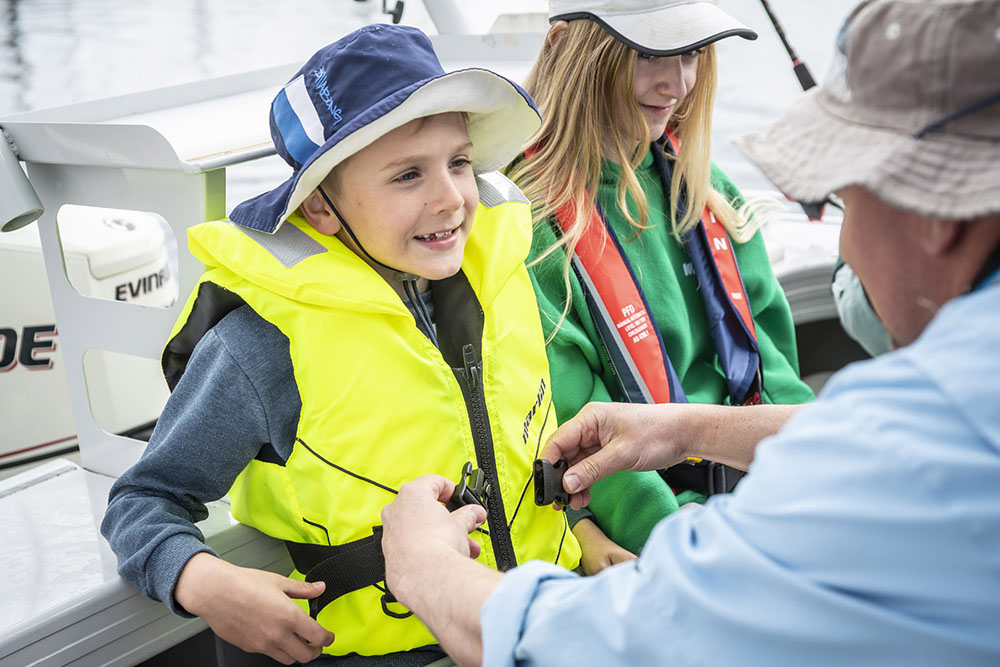
Choosing the right lifejacket
Make sure the lifejacket:
- follows appropriate standards for the lifejacket type
- is the right size for the child's weight
- meets Australian Standard (AS) 4758 or other recognised international standards. Older standards are not accepted in South Australia. This includes AS 1512, AS 1499 and AS 2260.
Find more information about carrying and wearing lifejackets.
Level 100 or above lifejackets on children
A level 100 lifejacket is the minimum requirement for children in coastal semi-protected and unprotected waters.
This includes from the banks of:
- Lakes Alexandrina and Albert
- tidal waterways, such as the Port Adelaide River and Coorong.
Choose a lifejacket level 100 or above that:
- meets the requirements for all waters
- keeps your child face-up in calm water conditions
- fits your child's weight, sits securely and doesn't move in ways that may reduce its performance
- has a crotch strap to prevent the lifejacket from bunching up around their neck or your child slipping out the bottom.
A lifejacket that fits well is vital for safety. Here are some examples of what a lifejacket should and shouldn't look like when worn.
Correct size
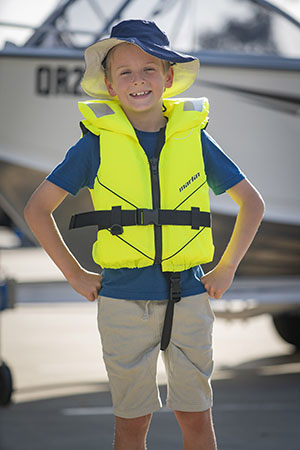
This level 100 lifejacket is the correct size.
The weight rating of 22 to 40 kg is suitable for this child's weight of 28 kg. The lifejacket size appears proportionate to their body.
Too big
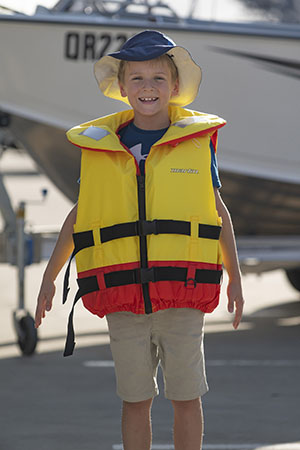
This lifejacket is too big.
This child would probably slip out the bottom of this lifejacket if they fell into the water.
Too small
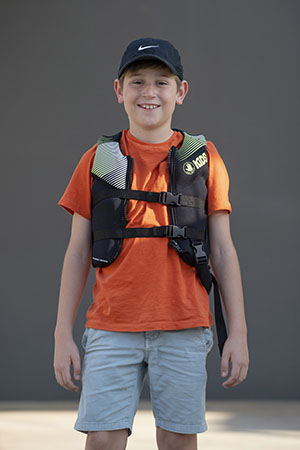
This lifejacket is too small.
This child's weight may exceed the weight rating. The lifejacket may not keep them afloat if they fell into the water..
Level 50 or 50S lifejackets on children
Level 50/50S lifejackets:
- have less flotation than a level 100 lifejacket
- may not roll your child into a face-up position in calm water if they were unconscious
- are commonly used by children on protected waters, such as the River Murray
- cannot be used by children on coastal waters unless water skiing or riding a jet ski.
Children (and anyone else) riding a jet ski or water skiing must only wear a level 50/50S lifejacket. This is because these lifejackets:
- are designed for impact falls
- reduce the risk of neck and spinal injuries in high-speed falls
- allow full movement and control for steering, balance and reboarding.
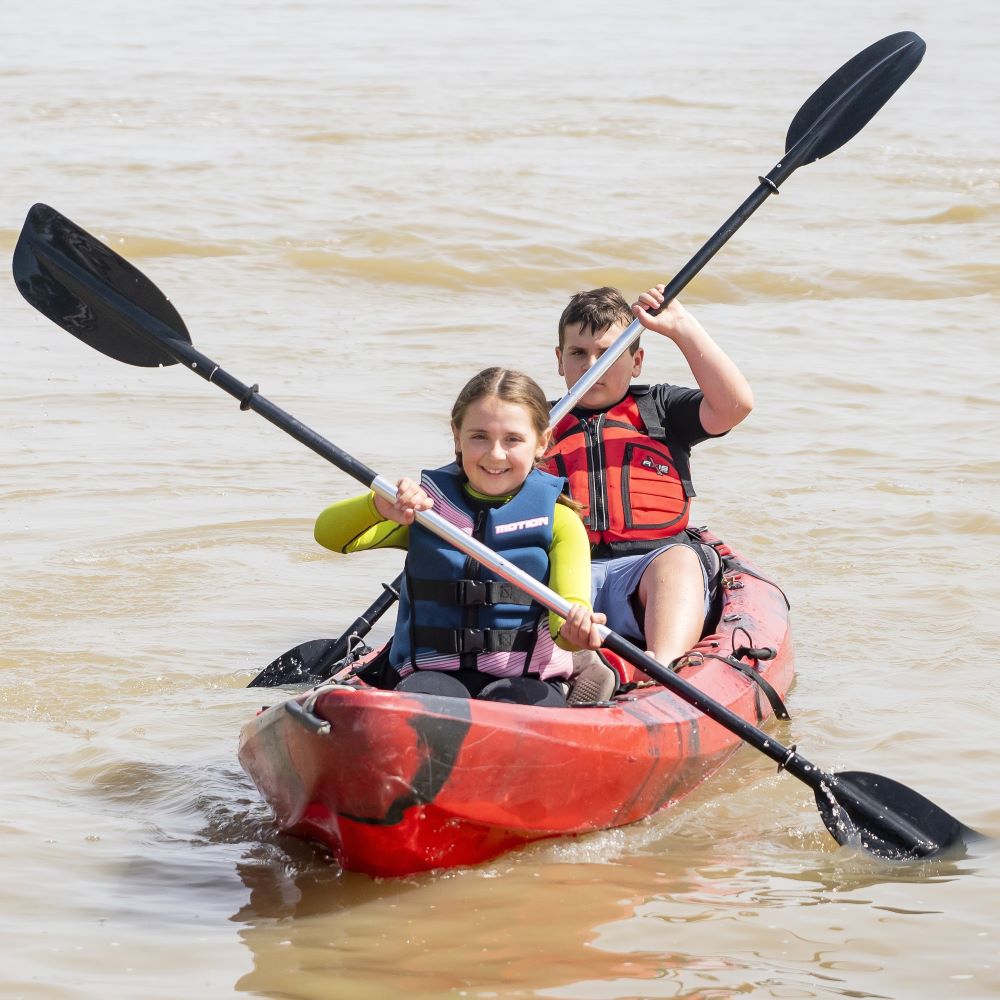
Example of children wearing correctly fitted level 50 lifejackets.
Automatic inflatable lifejackets on children
Automatic inflatable lifejackets are allowed for children 12 years or younger, or who weigh less than 40 kg, if the lifejackets:
- inflate automatically on contact with water
- have a backup pull cord
- are serviced regularly according to the manufacturer’s instructions
- fit correctly.
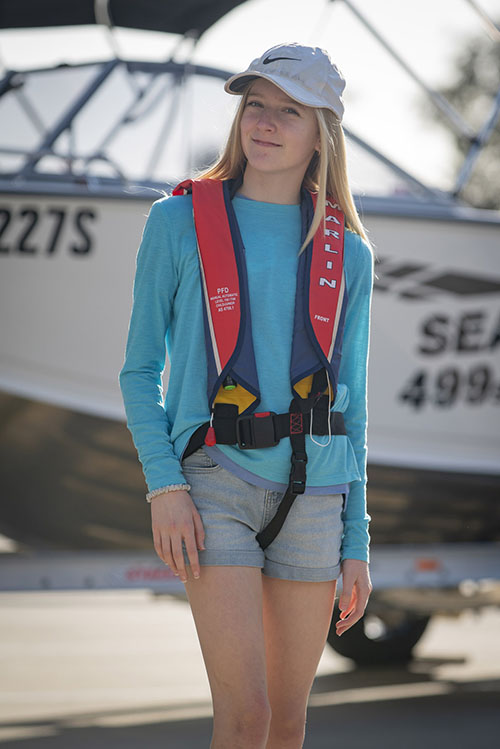
Example of a child wearing a correctly fitted automatic inflatable lifejacket.
Lifejackets for infants
Choose a lifejacket for your baby that:
- is the right size for their weight, not their age
- fits snugly and doesn't ride up over their chin or arms
- has adjustable crotch or thigh straps to stop it from slipping off
- has head support and a collar to help keep their airway clear
- has a grab handle so you can lift them from the water more easily
- meets AS 4758 or another approved international standard.
Do not use swimming pool aids instead of a lifejacket. The example below shows a swimming aid that does not meet the safety standards for boating.
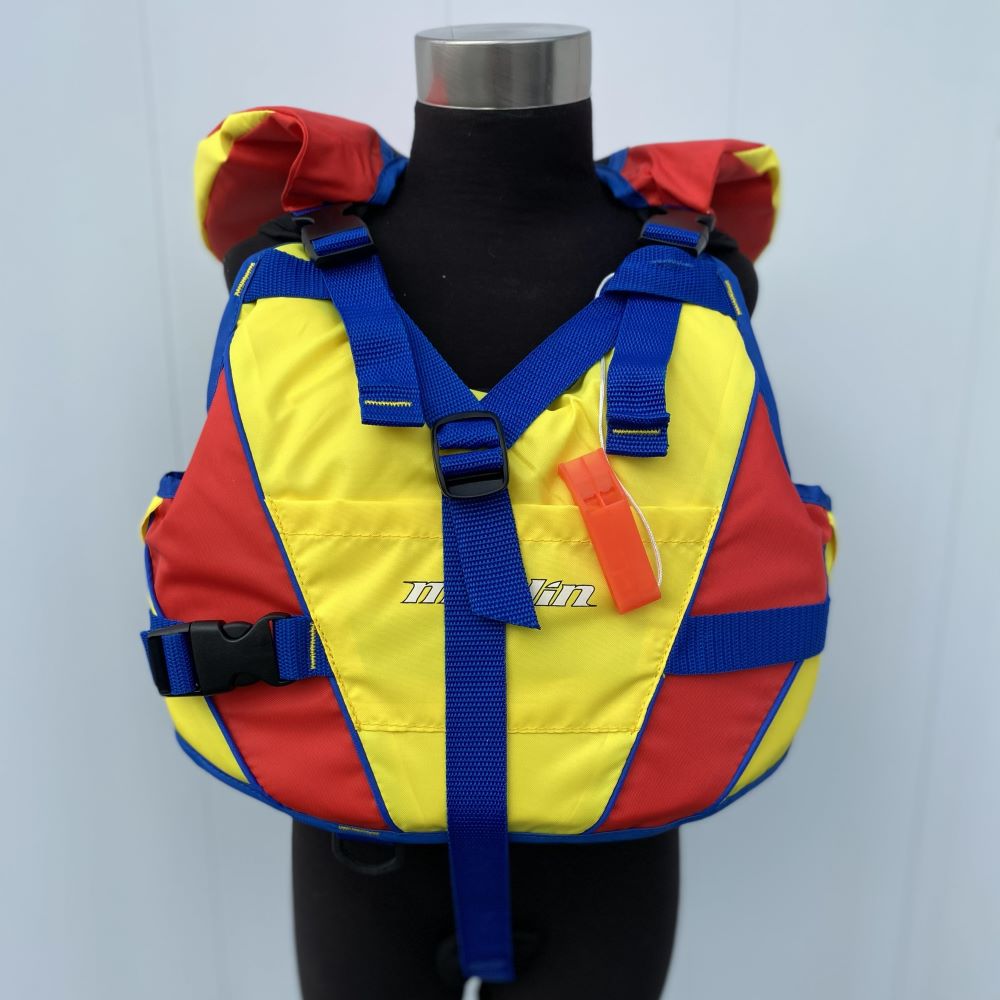
Do not use swimming aids, even if they look like lifejackets.